Community Garden Markers
Engraved markers for community and public pollinator gardens — species identification that survives volunteer turnover, winter dormancy, and the months when a planted bed looks like bare ground.
The community gardens I make markers for are pollinator plantings rather than vegetable plots, and they have a labeling problem a vegetable garden does not.

Herbaceous natives disappear. A milkweed or a blazing star that stood four feet tall in August is gone by January — not dead, just dormant — and there is nothing above ground to say otherwise. That is how established plants get dug up, planted over, or mulched under by somebody who reasonably assumed the space was empty. A permanent marker is the cheapest way to stop that happening.
The second problem is the volunteer with a trowel. A first-year native seedling and a weed look remarkably alike to somebody who did not plant it, and the person who did plant it is usually not there on work day. Labels turn a bed anyone can weed into a bed anyone can weed correctly.
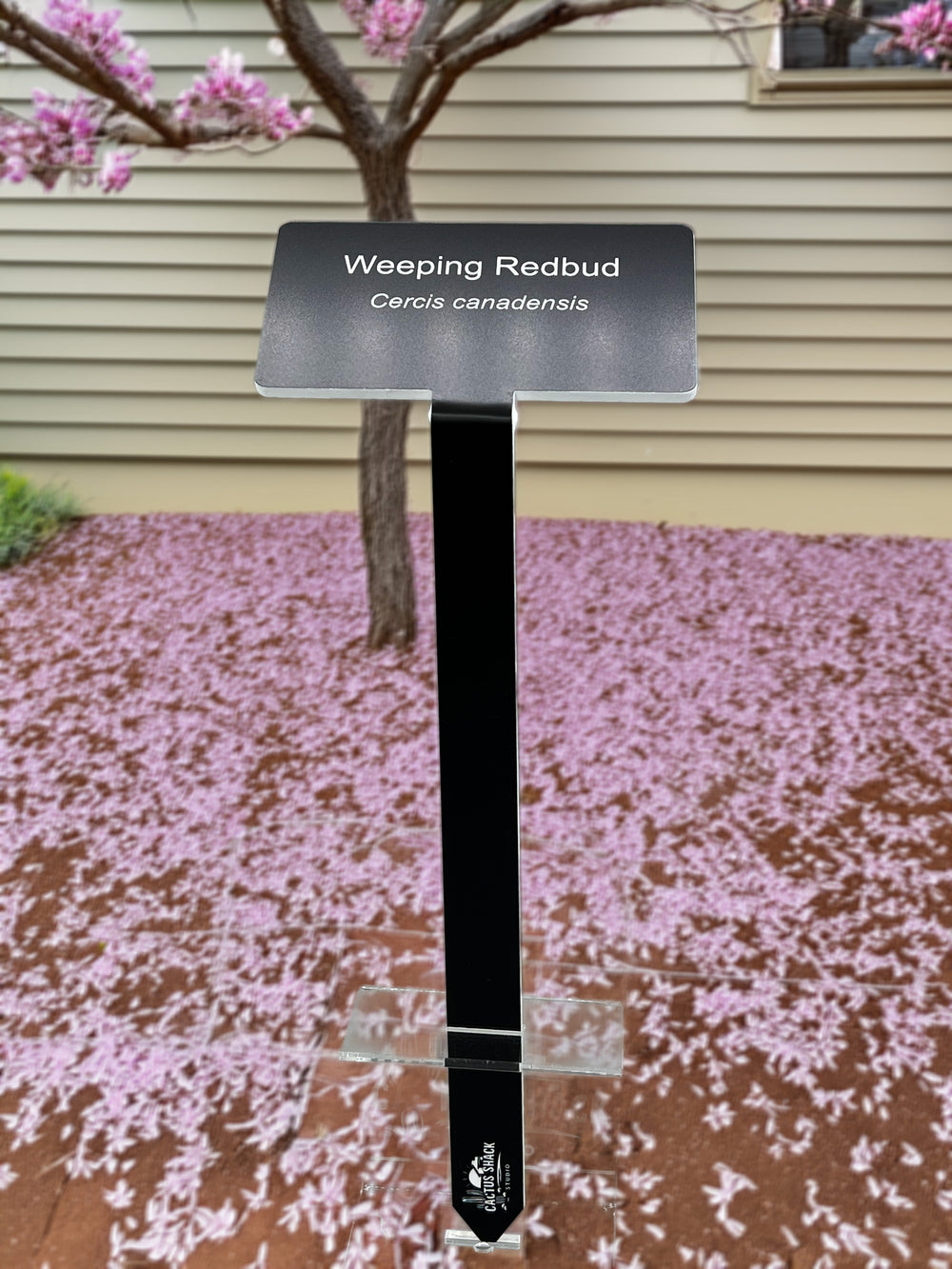
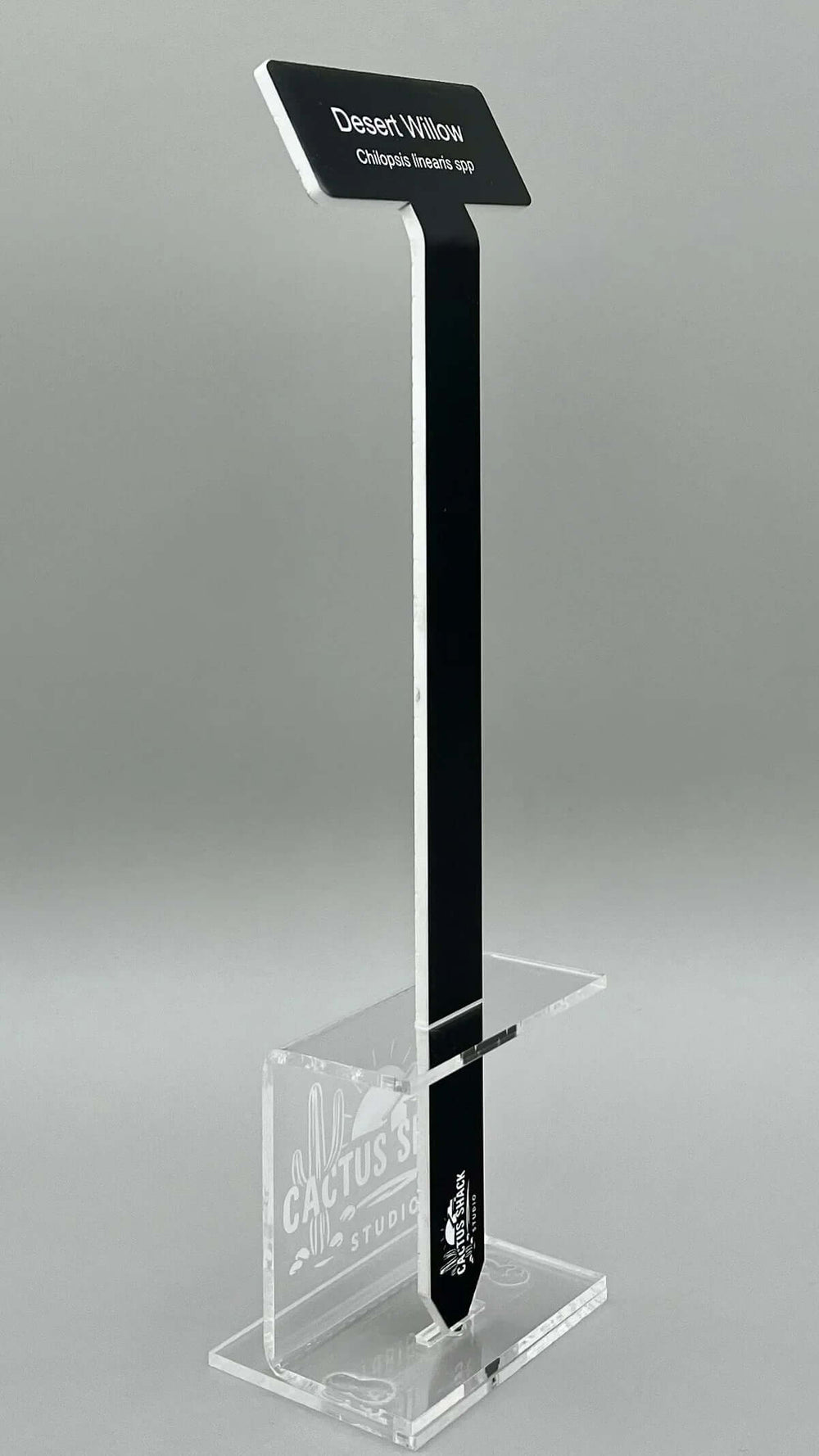
Both names, always. Regional natives get sold under overlapping common names — several unrelated plants answer to "bee balm" or "blazing star" depending on who you ask — and the botanical name is the one that settles it. On demonstration plantings the aluminum tags take an engraved QR code, which is where host plant versus nectar plant, bloom period, and whatever else the group wants a visitor to know can live without crowding the tag itself.
Aluminum for anything permanent. A community bed belongs to no one individually, which means nobody replaces a faded tag — it simply stays faded. There is no coating to lift and nothing to fade.
I also engrave donor, sponsor and grant recognition markers, and dedication tags for beds planted in someone's memory. Those tend to matter to the people who funded the garden more than anything else in it.
Send me the plant list as a spreadsheet, however messy. I keep the format consistent across every marker in the garden — which does more for how a planting reads than any individual tag does — and I check the botanical names before anything goes on the laser.
Engraved rather than printed, made one at a time in Phoenix, Arizona.